Return to the original

Winnie the Pooh: The bear of very little brain who captured the world.

Before the films, merchandise and modern adaptations, there was a small boy, his toy bear and a book published in 1926. Discover A. A. Milne’s gentle, funny and deeply English world of Winnie-the-Pooh.

First
published
1926
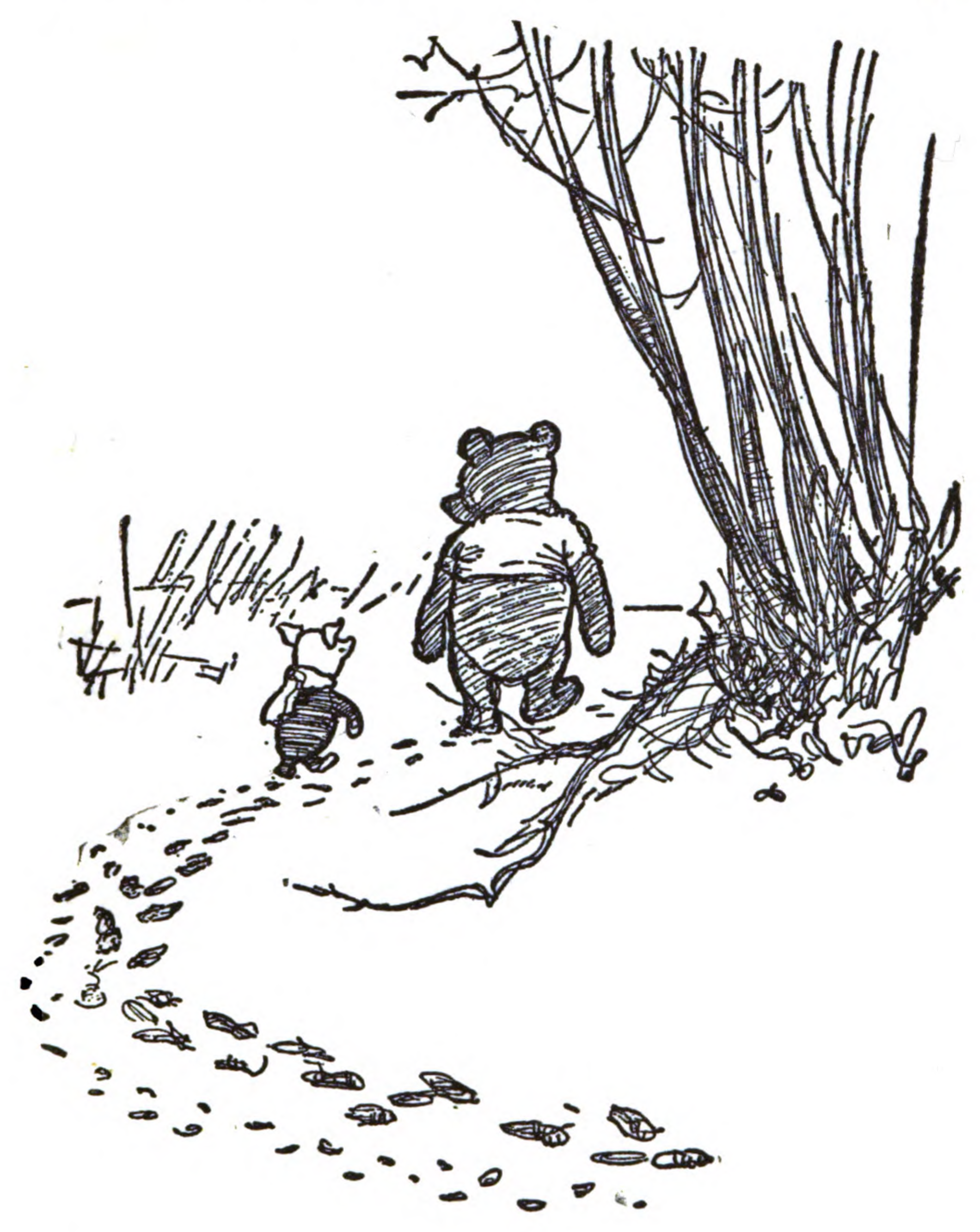
E. H. Shepard’s original illustration of Winnie-the-Pooh and Piglet walking in the woods
Pooh and Piglet on a woodland walk, drawn by E. H. Shepard for the original 1926 book.
A. A. Milne Author
E. H. Shepard Illustrator
October 1926 First publication
10 adventures In the original book
How it began

A father, a son and a nursery full of animals

Alan Alexander Milne was already known as a playwright and contributor to Punch when the toys of his young son, Christopher Robin, inspired a different kind of writing.

The bear was joined by Piglet, Eeyore, Kanga, Roo and Tigger—all based on Christopher Robin’s toys. Owl and Rabbit came from Milne’s imagination. Their adventures found a home in a woodland closely inspired by Ashdown Forest in East Sussex, near the Milne family’s country retreat.

The stories feel imagined and remembered at once: childhood logic, adult wit and the quiet rhythm of a walk in the woods.

Pooh appeared in Milne’s 1924 poetry collection When We Were Very Young. Two years later, Winnie-the-Pooh brought the bear and his circle of friends fully to life.

The original friends

Who lives in Milne’s Wood?

The characters are memorable because each sees the world differently. Their flaws cause trouble, but friendship nearly always puts things right.

W

Winnie-the-Pooh

A good-natured bear guided by friendship, curiosity and a dependable appetite for honey.

C

Christopher Robin

The reassuring boy whom the animals trust to understand nearly every problem.

P

Piglet

Small and often nervous, yet capable of remarkable courage when his friends need him.

E

Eeyore

The gloomy old grey donkey whose dry observations make him impossible not to love.

O

Owl

A grand storyteller and self-appointed expert, whether or not he has the answer.

R

Rabbit

Practical, organized and always ready with a plan—especially for everyone else.

K

Kanga & Roo

A sensible mother and her lively child, bringing warmth and family life into the Wood.

T

Tigger

The famously bouncy newcomer joined the friends in Milne’s 1928 sequel, The House at Pooh Corner.

The enchanted setting

The Hundred Acre Wood

Milne’s fictional landscape grew from Ashdown Forest, where the family walked and played. Shepard visited the area and used its paths, bridges and trees to shape the illustrations readers recognize.

Pooh’s House

Under the name of Sanders, Pooh lives beneath a tree and keeps his cherished pots of honey close by.

The Six Pine Trees

A place for an Expedition to the North Pole—and for the sort of discovery that only makes sense in childhood.

The Sandy Pit

The landscape becomes a stage for tracking, exploring and the elaborate games of Christopher Robin and his friends.

Rabbit’s Burrow

A respectable home with a very small entrance, as Pooh learns after eating rather too much.

Eeyore’s Gloomy Place

A quiet corner of the Wood where Eeyore lives among the thistles and contemplates his troubles.

The Bee Tree

Pooh’s longing for honey inspires a blue balloon, a rain cloud disguise and one of the book’s best-known escapades.

Inside the 1926 book

Ten small adventures

The chapters read like stories told aloud—each complete in itself, but together forming a portrait of friendship in the Wood.

Pooh tries to reach the bees and get some honey.

Pooh visits Rabbit and gets into a tight place.

Pooh and Piglet go hunting and nearly catch a Woozle.

Eeyore loses a tail—and Pooh finds one.

Piglet meets a Heffalump in a trap meant for someone else.

Eeyore celebrates two birthdays with two useful presents.

Kanga and Baby Roo come to the Forest, and Piglet has a bath.

Christopher Robin leads an Expedition to the North Pole.

Piglet is entirely surrounded by water.

Christopher Robin gives Pooh a party, and the friends say goodbye.

Why it lasts

A children’s book with room for grown-ups

Milne’s language is simple without being shallow. Shepard’s spare drawings leave space for imagination, while the characters embody recognizable parts of ourselves.

Gentle humor

The jokes grow from misunderstandings, invented logic and the gap between what characters believe and what readers can see.

True friendship

The friends irritate, rescue, misunderstand and forgive one another. Affection matters more than perfection.

A child’s scale

A puddle can become a flood and a walk can become an expedition. The Wood preserves the seriousness of childhood play.